Jemm Interview | AGIdealist Microgrants 2025 Grantee
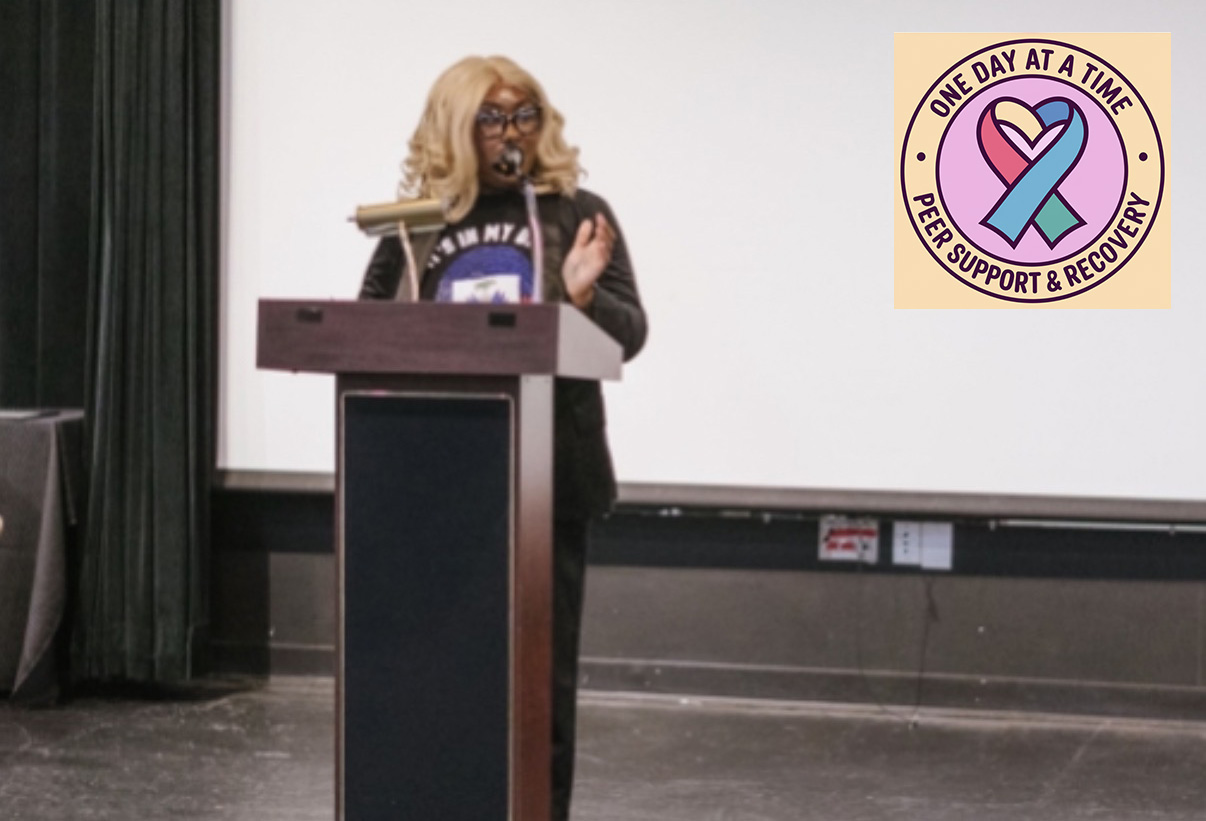
Jemm is the founder and Executive Director of One Day at a Time, a North Carolina organization focused on supporting people and strengthening community through direct assistance and connection.
In 2025, Jemm and One Day at a Time were one of ten recipients of the A Great Idealist Microgrant. Their project focused on creating a series of inclusive and stigma-free voter education events geared towards Black and brown community members. This interview is with Jemm.
Could you introduce yourself and your project?
I'm Jemm and my pronouns are she/they. I am the founder and Executive Director of One Day at a Time. [Our project] was targeted towards voters who are Black and Brown and folks who have experienced substance abuse. We wanted to emphasize how important voting was.
Can you talk a little bit about the Public Health and Power series?
Some folks legitimately have no idea what their power is as someone living in a community. There's been a stigma if you've used substances or if you're Black or Brown that your vote doesn't count.
Over the last couple years, I've noticed this is a serious community issue that needed to be talked about. I saw someone who promotes a lot of voting throughout the state of North Carolina, and I got with them and asked them if they would be able to put something together that was very easy to understand. I think a lot of the voting jargon can confuse folks or throw them off.
They don't really know what's going on, who to vote for, what district they live in. To me, that was enough to say, “I want to be a part of that,” and branch out from what we normally do. We're usually in community doing other things, but I think this was a really important thing to do.
What does power mean to you in the context of public health?
Being able to be outspoken and being able to give folks back some power. I don't know how we've gotten lost over the last couple years with folks feeling like they're just not a part of their communities. When I think about engagement and public health, it’s just giving folks back what they deserve. Especially hearing them trying to roll back voters' rights and other things like that, I want folks to be very aware of what is going on. It felt like a healthy space to say, “this [power] is yours.”
What do you think has led to people feeling so disenfranchised and isolated from their community?
The system is set up to confuse people. Higher education is not for everybody. There are folks who get this information and understand how to process this, and there are folks who just don't understand it. That's what's led us to this space where we're all over the place. I've met folks who are living in Durham who quite literally don't know anything about their elected officials.
Not knowing those things puts folks in a black hole, because they don't know what's going on. They don't know that their vote is gonna count towards the roads that they're living on or housing.
Can you talk a little bit about community care?
As somebody who has experienced homelessness and food insecurity and also is somebody who has higher education and has had that for a long time, giving folks information from both aspects has been really helpful in community care. Unfortunately, it's really difficult to have a conversation with someone when you have not really experienced the things they might have experienced.
When I used to work in gender-affirming care, you have providers who are trying to talk to folks and they have no idea what this person has gone through. They have no idea what that looks like for them. It’s the same thing for community: if you've never experienced facing homelessness, if you've never experienced being Black or Brown, it’s really not going to get across with your community. It’s very helpful for me to be in community and to introduce folks who do have those lived experiences.
Can you tell me how this project went?
I'm not gonna lie, it was kind of difficult, right? Because, I'm bringing in a white, educated, person into spaces that are not historically used to that type of conversation. If they are, it's not anything good. It was really challenging to say, “This is what I want to do, and this is how I want to do it,” without contradicting what I was saying. I know about voting rights, and I know how to go to the polls, but there are some things that I really was confused about. Showing up in that space with this person and saying, “I want you to take over and I want you to go ahead and share these things, but this is how I'm gonna translate that to the community.”
Sometimes, it's really difficult to get folks in the same room. When we do things like this, we get some snacks and food for people, and we try to break it down into separate occasions. We had a virtual and an in-person. The in-person focused on Black and Brown voters, whereas the virtual was open to folks who are in all parts of community. We tried to get the community to really understand that this is just information from somebody who does this twenty-four hours a day and that the information that they have is going to be helpful for all of us.
Can you walk me through what one workshop would have looked like?
We talked about things like elected officials. When we asked folks if they knew who their elected official was, we got two hands out of fifteen folks that were there. So, we had a Q&A, and started off that way, asking, “What do you know about your town, or what concerns do you have about your town? Is it the roads? Is it access to housing? Is it how long the lines are when you're going to the health department?” It kind of opened folks’ eyes a little bit.
It was interesting to say, “This is who is responsible for this area, and this is what they tackle in your community.” Instead of throwing the information at participants, it was a place for questions. It was informational but not overwhelming like a regular town hall.
Did you get any feedback?
Folks were happy that they got food and that they got to ask questions. Folks kept saying, “I feel stupid, I don't want to ask this question.” It was really important to reiterate to them that they’re not, but that this information is not readily available to you. And if it is, a lot of it just doesn't make any sense.
Someone mentioned creating a document to help them know when it's time to vote, when the primaries are, and stuff like that. That was some feedback that we really appreciated and are still trying to navigate what that looks like for us. Personally, I think it does make sense to put that up on our website. Folks frequent our website for community events and food donations, so that feedback helped us put into perspective what the community really needs.
How did your community members shape this project idea?
I remember a conversation that I was having with someone at a conference. They said, “People don't care enough to vote.” That really shaped my brain a little bit, because you don’t know that. Folks think that just because you have access to a cell phone or the internet, you're able to get any information. A lot of folks struggle with literacy. Even for me, sometimes, I truly don't understand what I'm reading when I'm looking at some of these restrictions and information. It's just confusing.
That aspect of the community shaped how I wanted to go about this project. I used that negative comment and turned it into something positive. Then, I asked folks during our food distributions if they were planning on voting or if they were registered, and they were like, “Nope!”
So many people, especially Black and brown people, have been completely disenfranchised forever from voting. Information access and protecting voting rights is really important.
It helps to see other people who look like you in some of these spaces. Folks have told me they don’t want to listen to another white person saying XYZ about XYZ. That was a part of the difficulty with our project at first: that I was bringing in a white person who's gonna talk about these things.
Definitely. How did you reach out to people for this and promote it?
Thankfully, the person that I was working with has a really large social media following. They were able to put all these things online for people to access. Locally, I was passing out flyers telling people that even if they couldn’t make it, to scan the QR code for digestible information. A lot of the attendance came from word of mouth.
How will you measure the impact of this project?
We've been getting creative about engagement on social media. If somebody posts about this specific thing, we look to see where that engagement is, and we use that to measure what’s working. We're trying to navigate ways that are not so invasive to folks. We were thinking about doing a survey after, but we don't want to repeat the same things that other institutions are doing. Right now, we're just trying to figure out if we do this again!
How do you build respect and safety for community members into this space?
For us, it's letting folks know that even though I'm standing in this space and it may look like I have some type of power, I'm also a part of the community. I'm also a queer, Black person. This is not a space for me to be better than you or for me to be your teacher. It is literally just a community space for all of us to sit together and ask those questions—because I'm also asking questions—and we encourage folks, even if they're volunteering or if they're speakers, to be open. If they know the answer to something, say if. If they don't, let folks know that it’s a really good question, or that “I'm gonna take that back to whoever.”
What does it look like to create an inclusive and accessible learning environment?
We had folks who asked questions and started like, “I was using this substance, so I don’t feel like this is a place for me. I don’t want to be judged based on that part of my life.” We made it very clear that this is something for everyone. If we're looking at harm reduction and we're looking at peer support and things like that, there are elected officials who can help us with that, who can get us to another space, who can listen to what you're saying, and be able to apply that in community. We wanted to let folks know that they were welcome in this space, regardless of what they've gone through, what they have or haven’t used. We were able to use some of our grant money to do rideshares so folks could get there. It was important to know that some of the folks that we're in community with need extra support.
So, opening it up a little bit, can you talk a little bit about your work with One Day at a Time?
Right now, we're focused on being in the background, and really trying to support folks in our community and other organizations. There are organizations that are strapped right now, like the LGBTQ Center. They have these spaces, they have these workshops. We're wanting to offer rides to folks who need to get somewhere. We're doing a lot of food donations and a lot of donations for trans women who are recently incarcerated, because we also want them to participate. We also want them to know what their rights are as far as voting.
Because it is not a contest. It’s, “How can we be there for each other?” That speaks volumes to what community means to us. It simply just means showing up for each other, no matter what that looks like. So we've been pretty busy with that. We've been pretty busy with other organizations from out of state reaching out to us, wanting to know about what our foundation looks like, and how we operate One Day at a Time.
How are you keeping hope these days?
Seeing how folks are showing up for each other definitely gives me hope for the future. I've been working on tuning out all the negative comments, especially when I’m looking at things that have to do with substance abuse care and mental health and LGBTQ folks. For every negative comment, there's a positive comment. That has helped me keep hope for the future.
If you could leave one folks reading this with one message, what would it be?
This might be really cliche, but treat others the way that you want to be treated. It's not always gonna be easy. I’m not always gonna understand something the way that you understand something. When we're in community and we're talking to folks, be mindful that we are still one community—no matter if you're living here and I'm living there, or you have this and I don't have that. I see all these awesome organizations doing awesome things, but then the community care aspect is not there.
Is there anything else that you would like to talk about?
Something that we are trying to put on folks' radar is food donations. We are opening up our collection, where we pick up stuff and drop it off to folks in the community. I'll be posting that on all our social media soon.
We're looking for anything that's non-perishable. Right now, we're in the midst of building with different places in North Carolina. We're wanting folks to reach out to us and let us know what their needs are. That way we can start spreading across North Carolina and use our resources and funds to support folks. We serve all the counties in the state.
The Public Health and Power series brought civic education into One Day at a Time’s community space. In that safe and intentional space, people asked key questions about elected officials, voting, housing, roads, and healthcare. We believe so hard in this project because it is rooted in the fact that people deserve access to information about the processes and systems that impact their lives.
This approach reflects a shared investment in community care, and that’s a big part of what spoke to us about One Day at a Time’s work. Like so many folks have said before, we take care of us. In this context, that looks like sharing resources, organizing rides, and making sure knowledge is accessible and empowering for all. Jemm’s work is an example of what it looks like to show up for each other, and we’re grateful to have had a role in supporting that.
Much of the work we do at A Great Idea is about making complex information accessible and available to all of us. At the end of the day, meaningful change can only happen when we have the resources and power needed to shape our own futures. If you have an idea that will help you do that, we’d love to be your partner in making it happen. Get in touch with us and let’s do something great!