The Reason Our Founder Gave a TEDx Talk Is the Same Reason We Exist
Values conflict is the hidden driver behind nearly every brand, culture, and communications challenge we see in mission-driven organizations. Here's why we built an agency around solving it.
At A Great Idea, we work almost exclusively with nonprofits, foundations, healthcare organizations, and advocacy groups. And after a decade of that work, we've noticed a pattern.
Organizations come to us with a brand problem. Or a communications problem. Or a culture problem. Sometimes it's all three at once. The messaging isn't resonating. The team has lost momentum. The campaigns are technically sound but somehow not landing.
What we find, more often than not, is that these aren't really brand problems. They're values problems.
Specifically: values conflict — the slow, expensive friction that builds when an organization's actions are no longer aligned with what it says it believes.
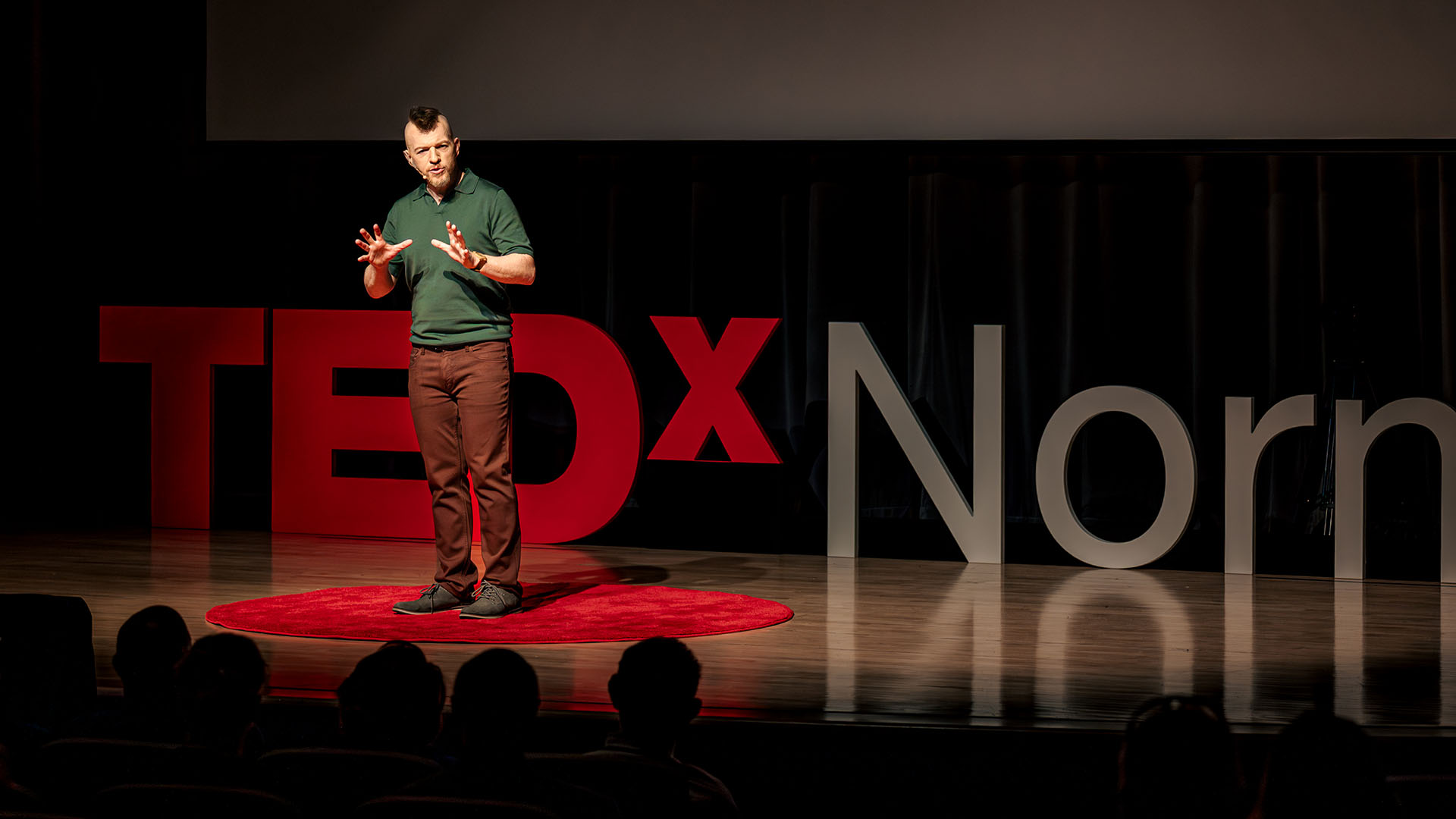
That's the subject of our founder Shane Lukas' TEDx talk, What Values Conflict Costs You, presented at TEDxNormal. And the reason he gave it is inseparable from the reason this agency exists.
What Values Conflict Actually Costs a Nonprofit
The phrase "values conflict" can sound abstract. It isn't.
In purpose-driven organizations, values conflict shows up in concrete, costly ways:
- Mission drift — incremental decisions that individually seem reasonable but collectively move the organization away from its core commitments (Download our free white paper about mission drift)
- Culture erosion — staff who came for the mission quietly disengage when they feel the organization isn't practicing what it preaches
- Ineffective communications — messaging that feels hollow to audiences who can sense the misalignment, even when they can't name it
- Leadership burnout — leaders exhausted not by workload alone, but by the invisible labor of trying to honor every important value simultaneously with no framework for prioritizing
These are the real costs. And they compound. A nonprofit can lose donors, talent, community trust, and program effectiveness — all traceable back to unresolved tension between its values.
Why This Is a Brand Problem (and a Strategy Problem)
At A Great Idea, we build brands for purpose-driven organizations. That means we work at the intersection of identity, messaging, design, and strategy. And we've learned that the most common reason a nonprofit's brand isn't working isn't a visual problem or a copy problem.
It's an alignment problem.
When an organization's internal values clarity is shaky, everything that depends on it becomes unstable. The messaging sounds generic because it isn't anchored in anything specific. The visual identity feels disconnected because it was built around positioning rather than conviction. The communications strategy produces content but not connection.
Strong nonprofit brand strategy doesn't start with a logo or a tagline. It starts with being honest about what your organization actually values — and building outward from there.
The Framework Behind the Work
Shane's TEDx talk introduces a three-level values hierarchy — distinguishing between defining values (who you are at your core), guiding values (how you operate day to day), and informing values (principles that matter but yield under pressure) — as a practical tool for navigating moments when important values compete.
This framework isn't new to us. It's the same values-clarity work that underpins our approach to brand strategy, communications planning, and organizational messaging with nonprofit and purpose-driven clients.
When a team can articulate which value leads in a given situation, the downstream work gets dramatically easier. Decisions move faster. Messaging gets sharper. Culture becomes something you can actually point to and protect. The mission stops being something printed on the wall and starts being something you can feel in how the organization operates.
Why This Moment Matters
Nonprofit and mission-driven organizations are navigating extraordinary pressure right now. Funding environments are shifting. Advocacy landscapes are more complex. The communities these organizations serve are facing real and urgent challenges.
In that environment, values clarity isn't a luxury or a soft skill. It's a strategic asset. Organizations with clear, internalized values make better decisions faster, communicate more effectively, and hold their integrity under pressure in ways that build — rather than erode — the trust they depend on.
That's why Shane gave this talk. Not as a departure from the work of A Great Idea, but as an expression of it.
Watch the Talk
What Values Conflict Costs You is available now at SaveYourSpark.com. It's 15 minutes. It's worth it — especially if you've ever had a nagging sense that something important is off in your organization and haven't been able to name it yet.
If what you hear reflects a challenge your organization is facing, we'd like to talk. This is exactly the kind of work we do.
Photo: Courtesy Charles Green / TEDxNormal